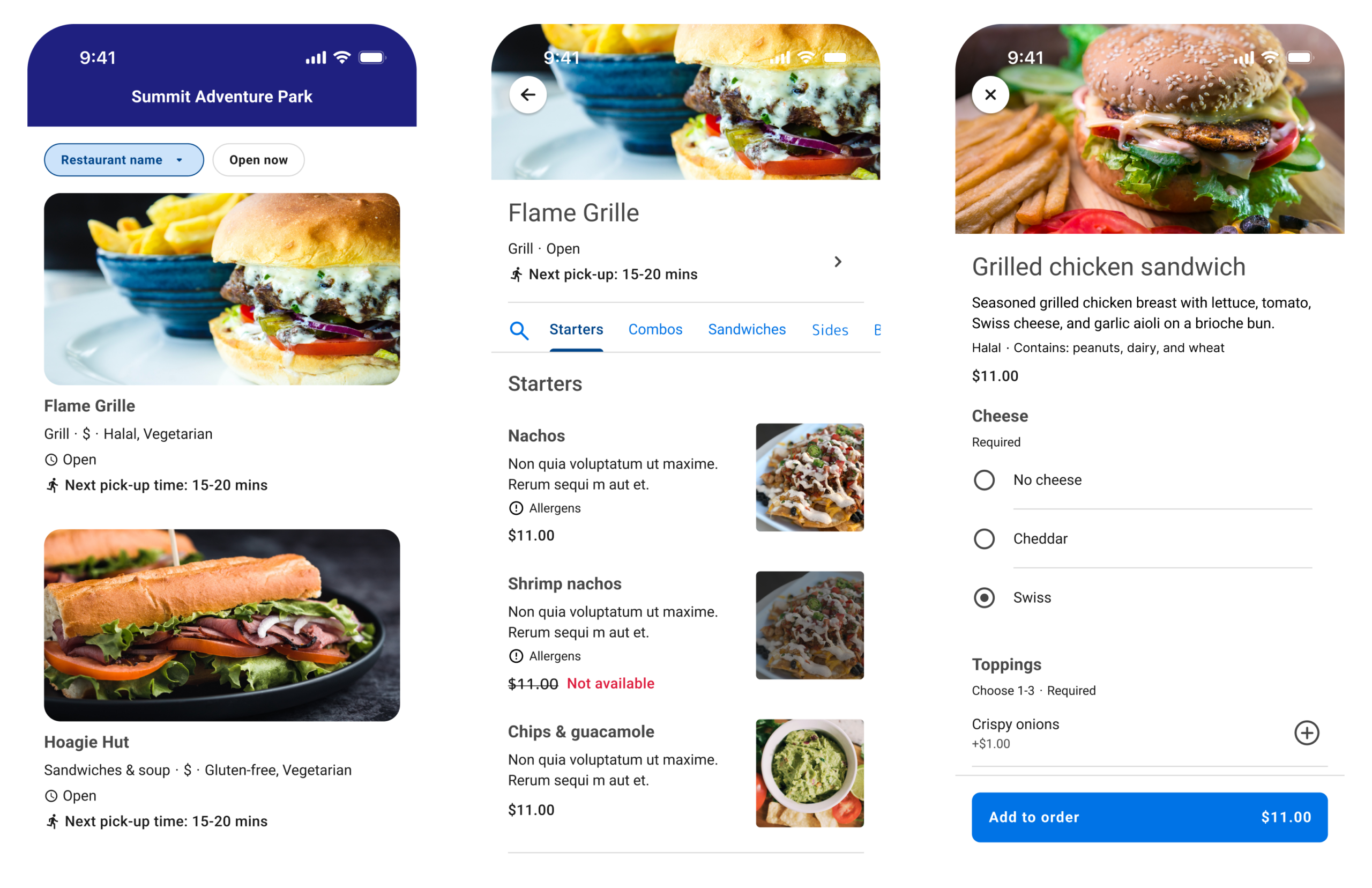
Freedom powers food and beverage ordering for attractions, museums, zoos, and entertainment venues. Guests expect to browse menus, customize meals, and complete purchases quickly, while venues need a platform flexible enough to support unique menus, fulfillment options, and operational workflows. The experience was redesigned to simplify ordering, reduce friction during checkout, and establish scalable interaction patterns that work across a variety of venues.
The challenge
Designed for Real-World Work
Ordering food at an entertainment venue is rarely as simple as selecting items from a menu. Guests often place orders while moving between attractions, coordinating with family and friends, or working within scheduled experiences. Behind the scenes, operators manage complex menus, product modifiers, inventory, and multiple fulfillment methods. The challenge was creating an experience that felt effortless for guests without sacrificing the flexibility operators rely on.
Discovery
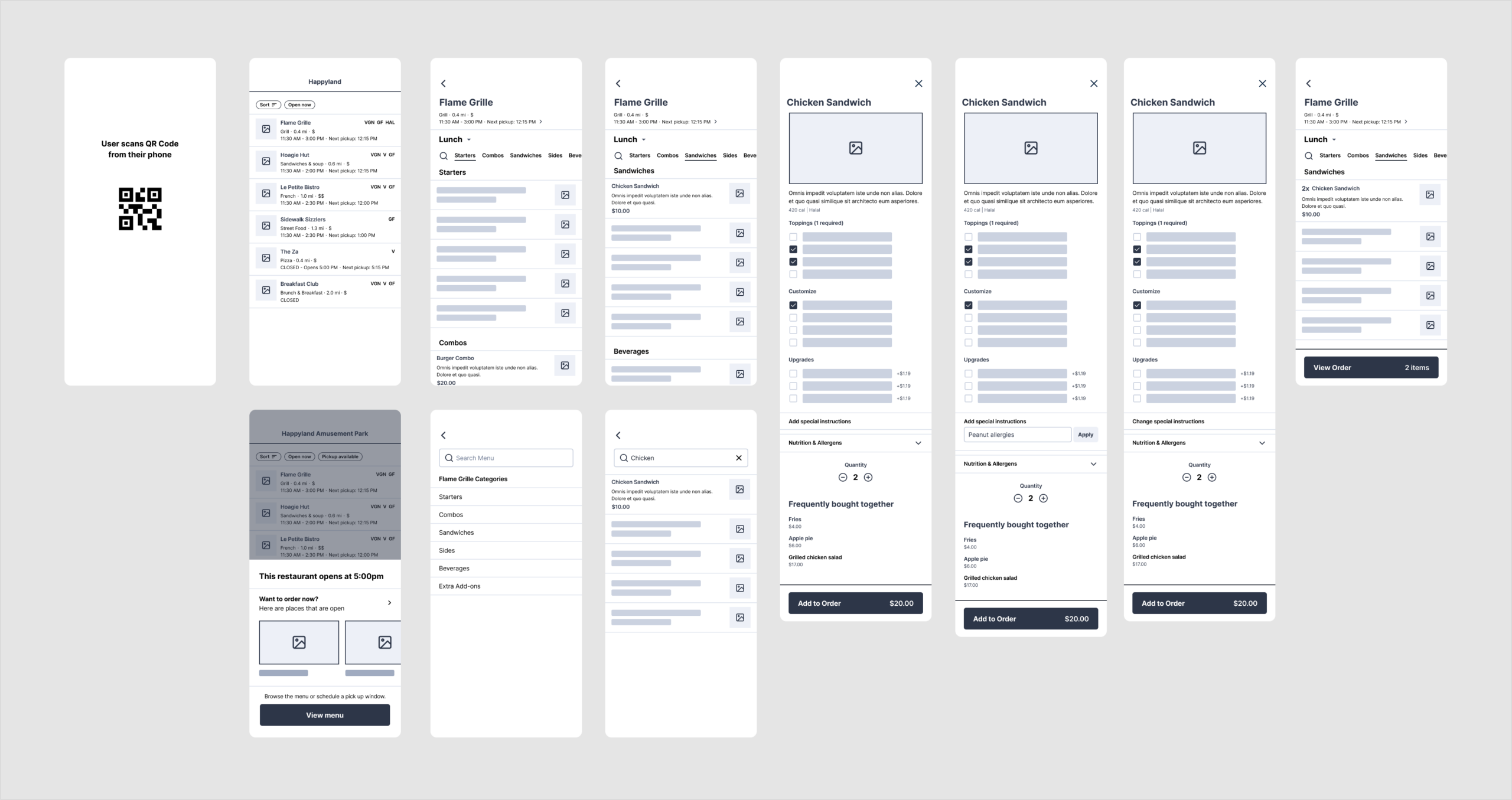
Understanding how guests navigate the ordering journey
Stakeholder feedback, product knowledge, analytics, and usability insights helped identify where guests slowed down, became uncertain, or abandoned common tasks. Rather than introducing additional functionality, opportunities centered on simplifying interactions, improving content hierarchy, and making decisions easier throughout the ordering flow.
The solution
Streamlining every step from menu to checkout
The redesigned experience prioritized the tasks guests perform most frequently while progressively revealing additional options only when needed. Clear information hierarchy, consistent interaction patterns, and reusable components simplified browsing, customization, and checkout without limiting flexibility.
Browse and compare menu options with ease
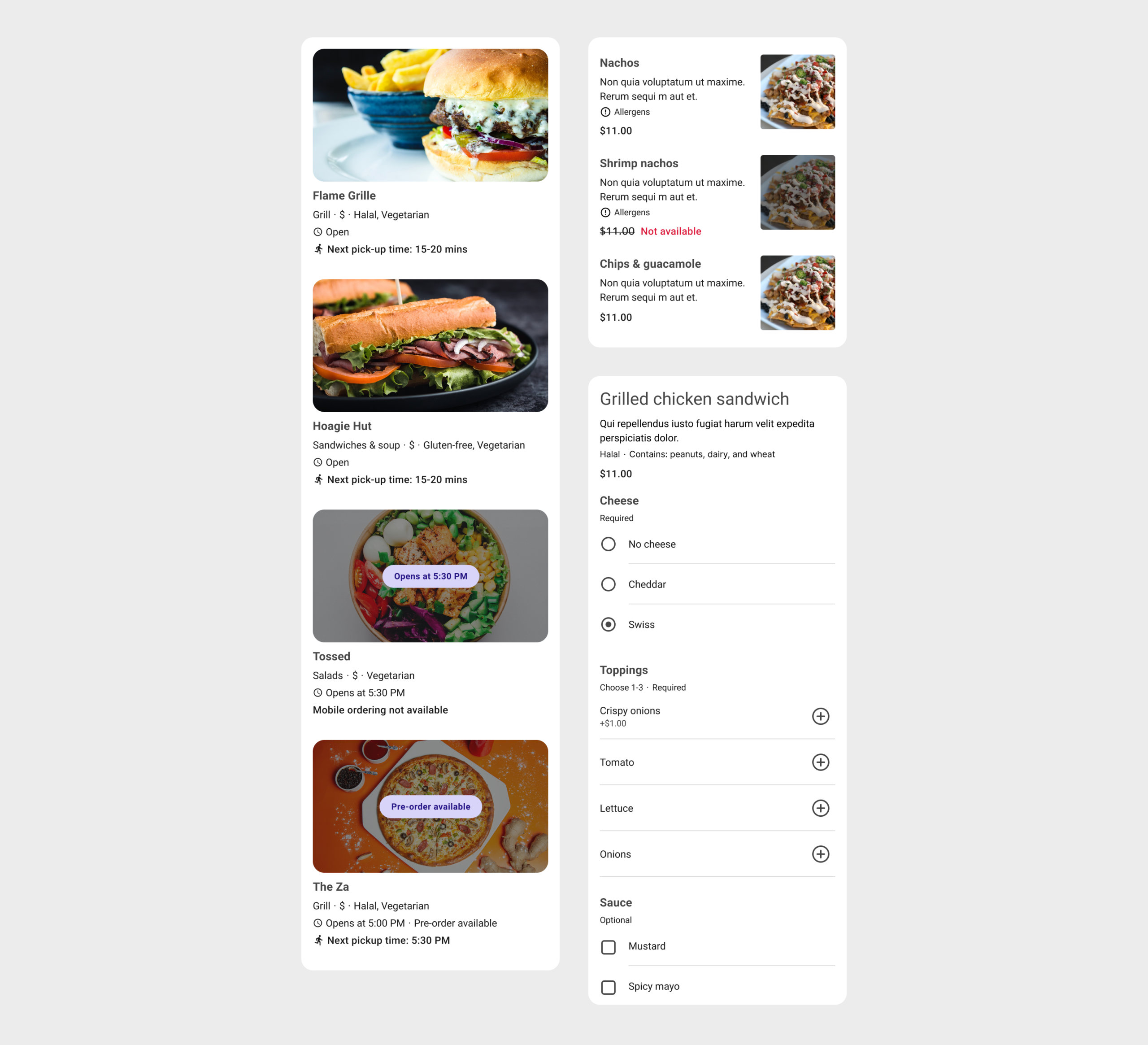
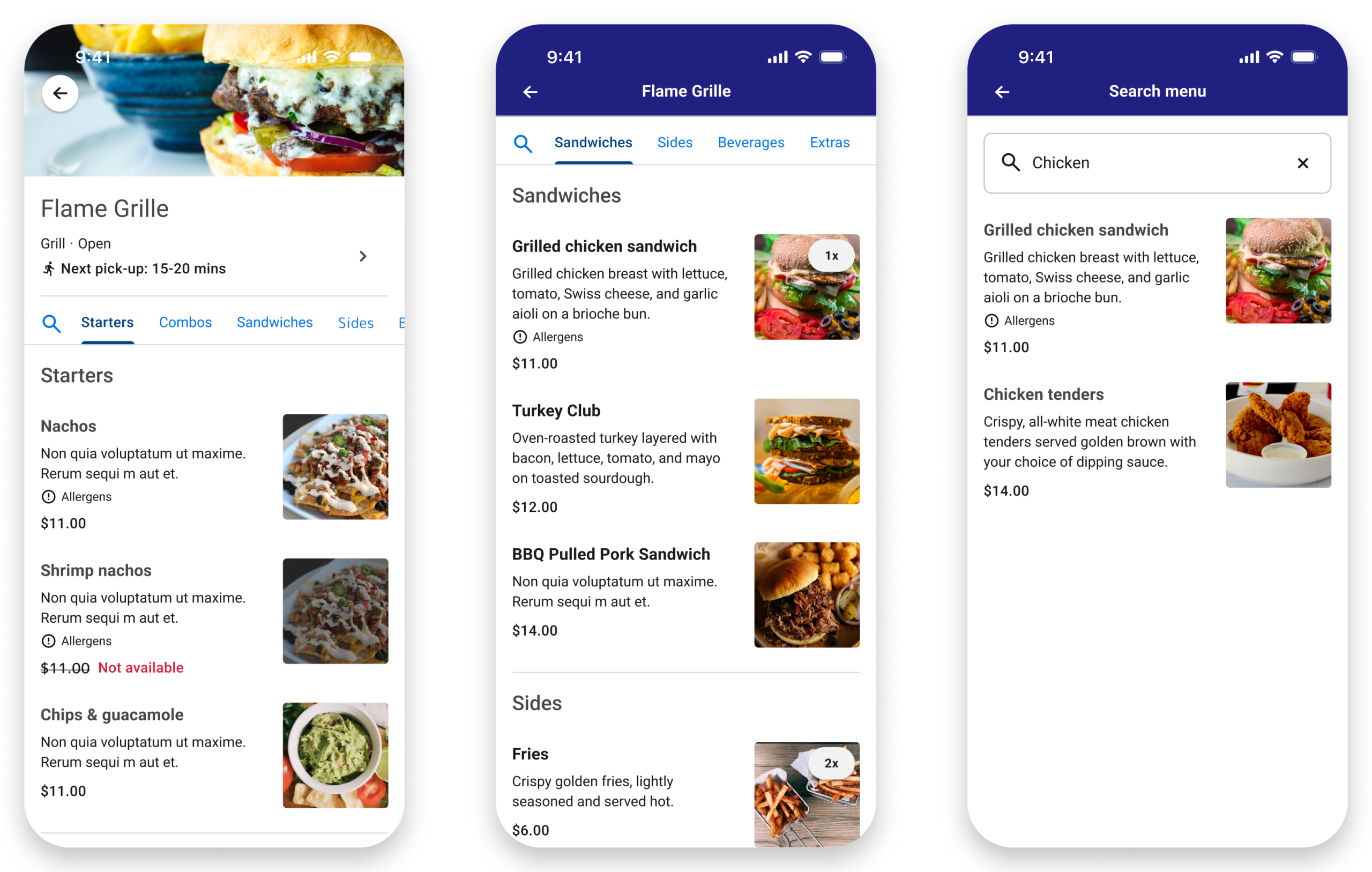
Categories, product cards, and item details were reorganized to improve scanability and reduce visual clutter. Information was grouped by priority, helping guests quickly compare options at a glance, while search provided a fast way to locate specific menu items without navigating through multiple categories.
Prominent allergen indicators and clear availability states surfaced important information early, reducing uncertainty and helping guests avoid unavailable items while easily identifying options that met their dietary needs.
Simplifying complex ordering decisions
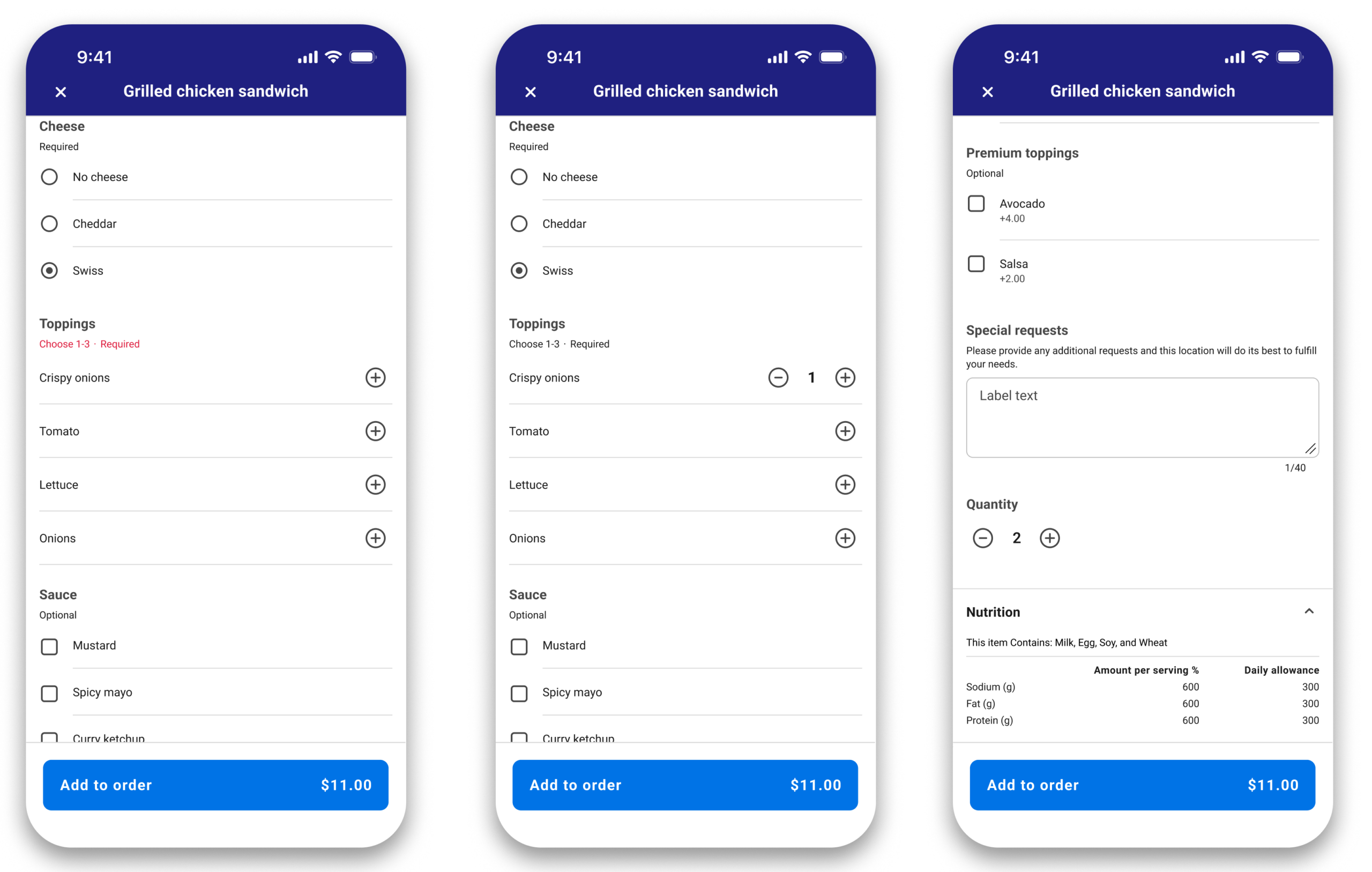
Required and optional modifiers were grouped into logical sections with clear hierarchy and validation. Guests could customize meals with greater confidence, while operators retained the flexibility needed to support diverse menu configurations.
Design System
Building reusable patterns that scale
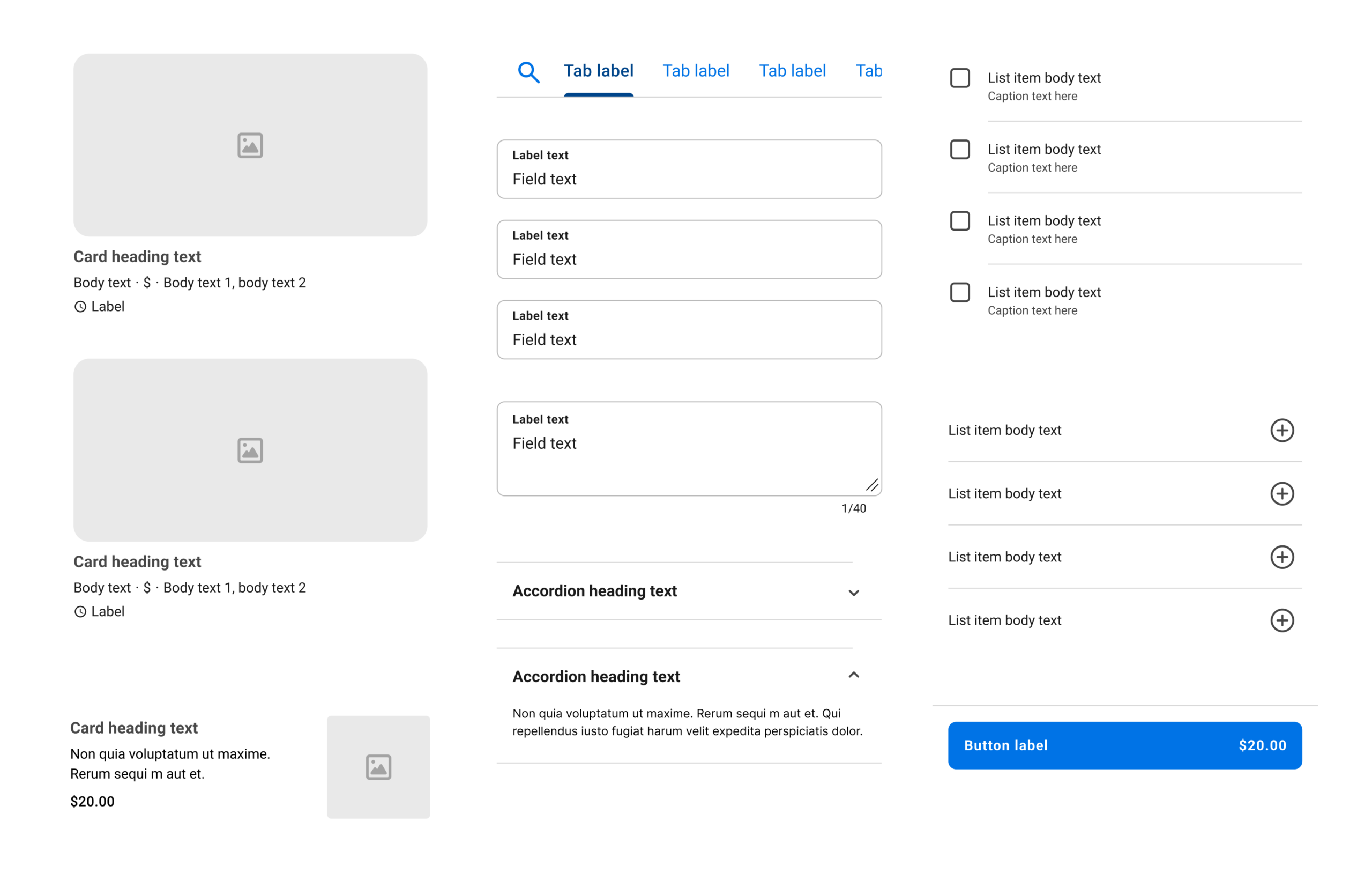
Product cards, modifier groups, quantity selectors, and browsing patterns were designed as reusable components that could support multiple venues and future enhancements. Shared patterns improved consistency while creating a stronger foundation for continued product growth.
Outcome
Close collaboration with product managers, engineers, and QA helped align user needs, business goals, and technical requirements throughout the design process. Regular feedback and iteration refined interactions early, resulting in solutions that were both intuitive for guests and practical to implement.
The redesigned experience streamlined the ordering journey while supporting the operational complexity of diverse venues. Clearer workflows, reusable components, and consistent interaction patterns created a scalable foundation for future enhancements, improving consistency for both guests and operators.